


Leaving for the Unknown: Ten Months That Changed My Perspective on the World
When I announced that I was going to Norway for a ten-month university exchange at the University of Oslo, the reactions were often the same: “Why Norway?”
The truth is, I didn’t have a very convincing answer.
Among the destinations offered by the Toulouse School of Economics were Barcelona, Montreal, and Oslo. Barcelona was a safe bet. Montreal, a familiar option. Oslo, on the other hand, was the unknown. I didn’t know anyone there, had never set foot in a Scandinavian country, and knew very little about Norwegian culture. It was precisely this element of the unknown that convinced me.
The weeks leading up to my departure were a strange mix of excitement and apprehension. Looking back, that fear was probably a good sign. It simply meant I was about to step outside my comfort zone—which was exactly what I was looking for.
A Bed Without Sheets
On August 1st, I arrived in Oslo in the middle of the night.
I picked up the keys to my residence, went up to a completely empty apartment, put down my suitcase, and collapsed onto the bed—without sheets. It was Sunday, everything was closed, and all I wanted was to sleep, sheets or not.
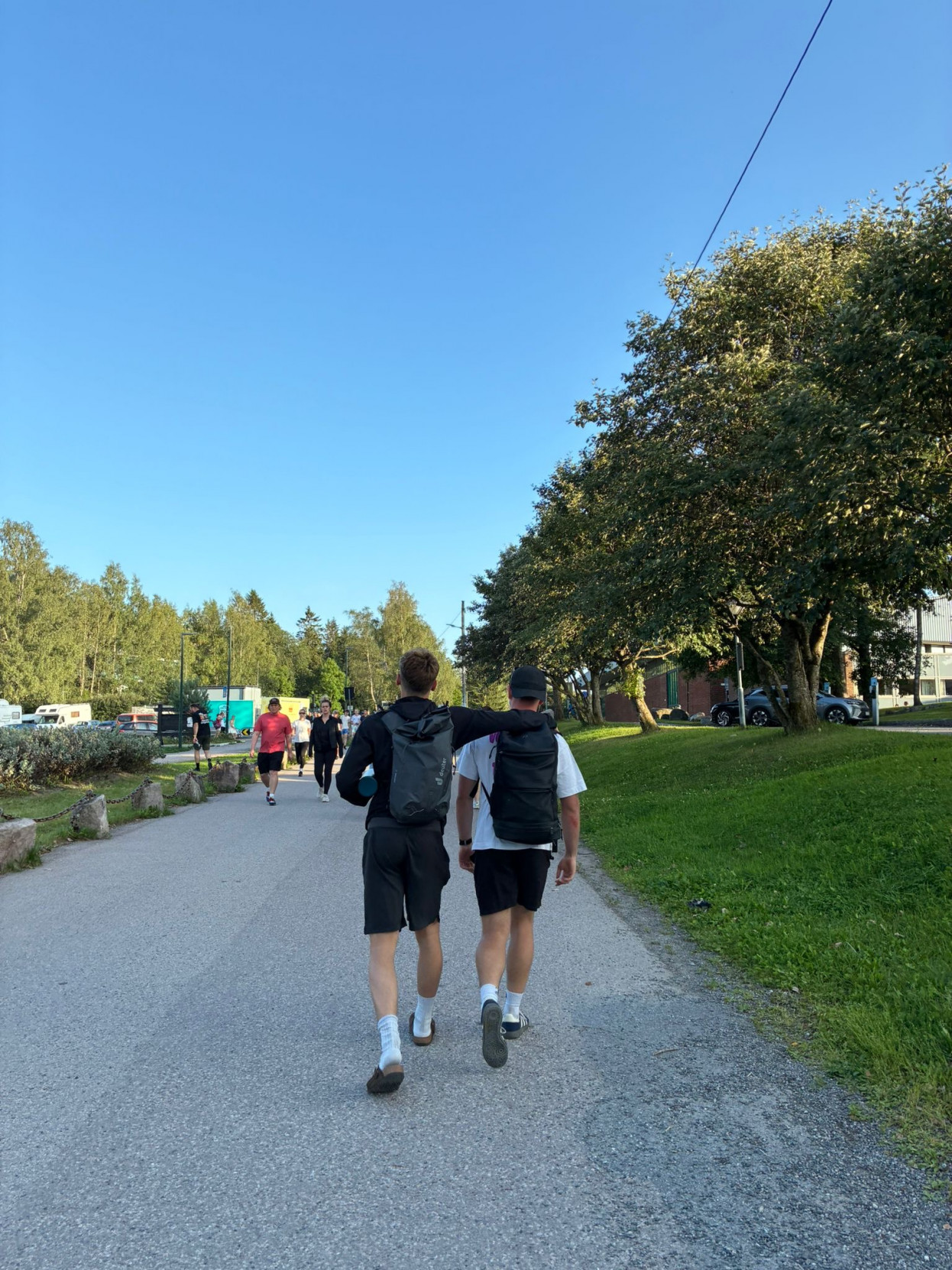
The next morning, the adventure could finally begin. Breakfast, first purchases, a trip to IKEA to furnish the room, exploring the neighborhood, meeting my roommates, then my first walk around Lake Sognsvann. I felt like I was rediscovering every little detail of daily life. Everything was new: the landscapes, transport, shops, language, habits. This feeling of complete disorientation was almost intoxicating. Ten days spent observing the place before the crowd arrived, like a slightly lost scout.
A few days later, the other international students began to arrive, suitcase by suitcase. Thanks to an app called GoIn, used by the university’s foreign students, several of us had already exchanged a few messages before even arriving. One evening, someone posted in the group: “Shall we meet tonight at No Name?”
There was something rather ironic about meeting future friends in a bar called No Name. I walked in not knowing anyone, in a place that, by definition, had no name to give to those unfamiliar faces. A few months later, of course, everyone had a name, a story, and a special place in this adventure.
Saying Yes
The next day, I suggested a hike. There were just a few of us at first. On the way, we bumped into a group of Dutch students. We chatted for a few minutes before inviting them to another student’s birthday party that same evening. A few hours later, we were all sitting around a table as if we’d known each other for months.
Looking back, that’s probably when everything really started.
What struck me most that August wasn’t a landscape or a monument, but the incredible energy that was everywhere. No one knew anyone. Everyone was far from home. Every message in a WhatsApp group could lead to a party, a hike, a swim in a lake, or an impromptu dinner.
I’d often heard that a university exchange depends on what you make of it. I never really understood that phrase until I experienced it. I hadn’t set any particular rules before leaving, but one philosophy naturally emerged: say yes. Yes to a hike. Yes to a birthday. Yes to dinner. Yes to a spontaneous outing—even when it rained, and in Oslo, it rains often.
The best memories of the year were almost all born from an invitation accepted without overthinking.
The Kringsjå residence encouraged this spontaneity. The shared kitchens were real social hubs. All it took was a message: “Anyone want to cook tonight?” A few minutes later, several people would head out to the local Kiwi store to buy ingredients, each bringing back an improvised dish and a good excuse for not following the recipe. Someone would make a dessert that looked like nothing you’d ever seen before, conversations would start, and the evening often ended with card games.
Every week, we also held our traditional “baking contest.” Each person took turns baking a cake for everyone, and the others would rate it as more or less objective connoisseurs. I never won, but it didn’t matter: it was exactly these simple evenings that remain some of my fondest memories and built the strongest friendships.
What Nature Can’t Explain
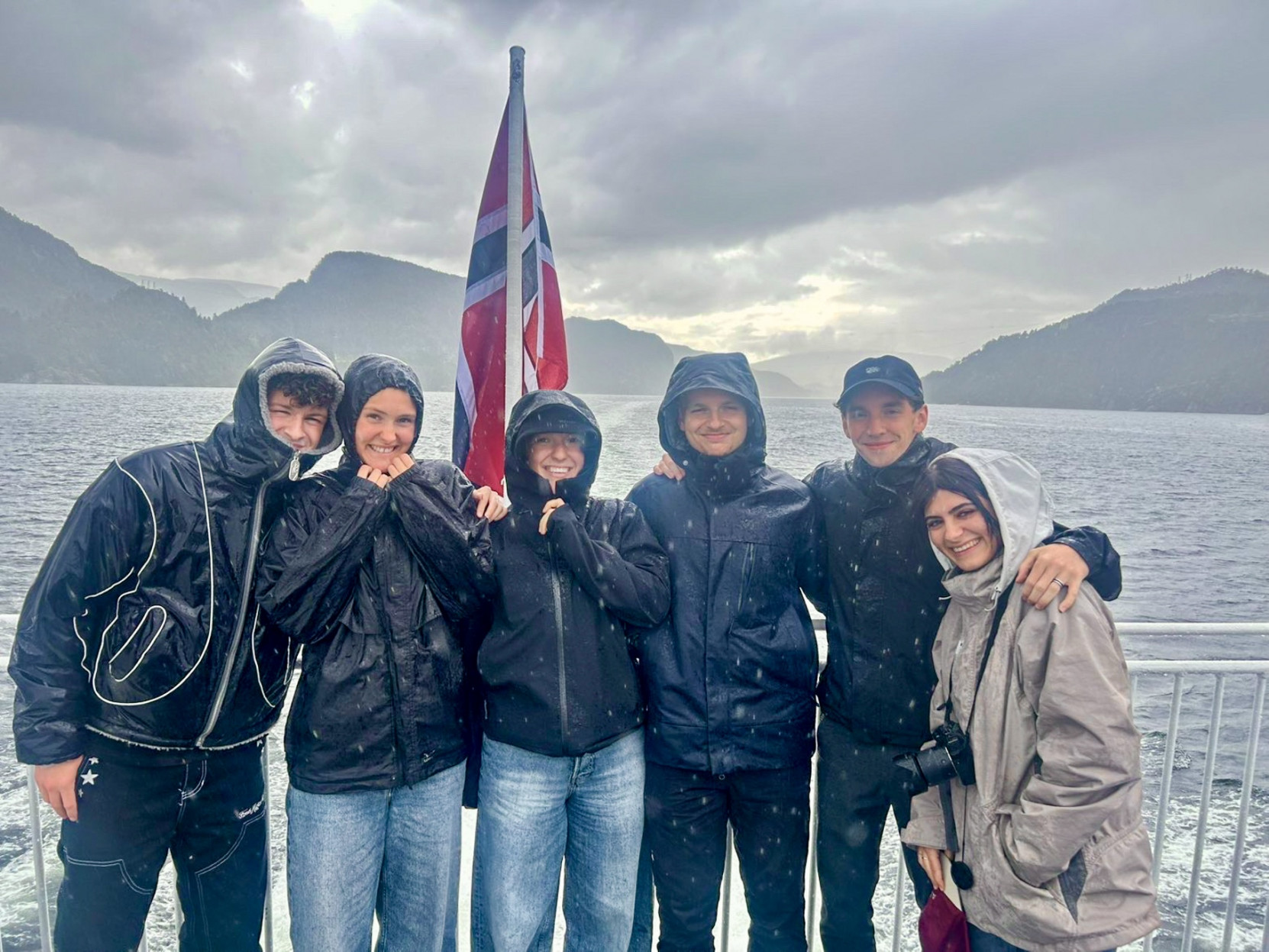
Of course, Norway amazed me with its landscapes. The fjords, lakes, mountains, ever-present forests… Sometimes just a few subway stops were enough to find yourself in the middle of nature. Trips to Bergen and later to the Lofoten Islands will stay with me forever. The Lofoten Islands, visited at the very end of my exchange with my parents, are probably the most beautiful place I’ve ever seen: mountains plunging directly into the sea, May days when the sun never seems to set, and hikes through landscapes that make you feel like you’re somewhere else entirely.
Yet what surprised me most wasn’t the nature. It was the Norwegians.
I knew they had a reputation for being reserved. I didn’t think the cultural difference would be so pronounced. Even after ten months, it remained surprisingly difficult to form real bonds with Norwegian students. Most have had their friend groups for a long time, and interactions with international students often remain limited to a polite smile in the hallway.
On the other hand, their way of life deeply impressed me. Respect for personal space is everywhere—in the subway, everyone naturally keeps their distance, to the point where you almost hesitate to sit next to someone if there’s another seat free. The workday ends early and, once it’s over, it’s truly over. Liquor stores close early, as do bars. Families spend a lot of time outside, whatever the season: seeing babies sleeping in their strollers in the middle of winter, in subzero temperatures, is just part of daily life.
Here, going out isn’t an exceptional activity. It’s simply a way of life.
A Second Exchange within the Exchange
After Christmas, a second adventure began. I thought I would pick up my exchange where I left off. In reality, everything was different.
Most of my friends had returned to their home countries. I had to rebuild a social circle, and strangely, that second beginning was harder than the first. In August, everyone was new and looking for someone to talk to. In January, I felt like I was starting over, with memories of the first semester still fresh—a bit like coming home to an empty house after a party.
In the end, this new stage turned out to be just as rich, but different. My circle of friends changed completely. The first semester, I spent most of my time with Europeans, with not a single French person in the group. The second semester felt more like a mini world tour: Australians, a Quebecer, a Singaporean student, and, for the first time since I’d arrived, several French people. After five months spent almost exclusively speaking English, it felt strange to hear and speak some French again over dinner.
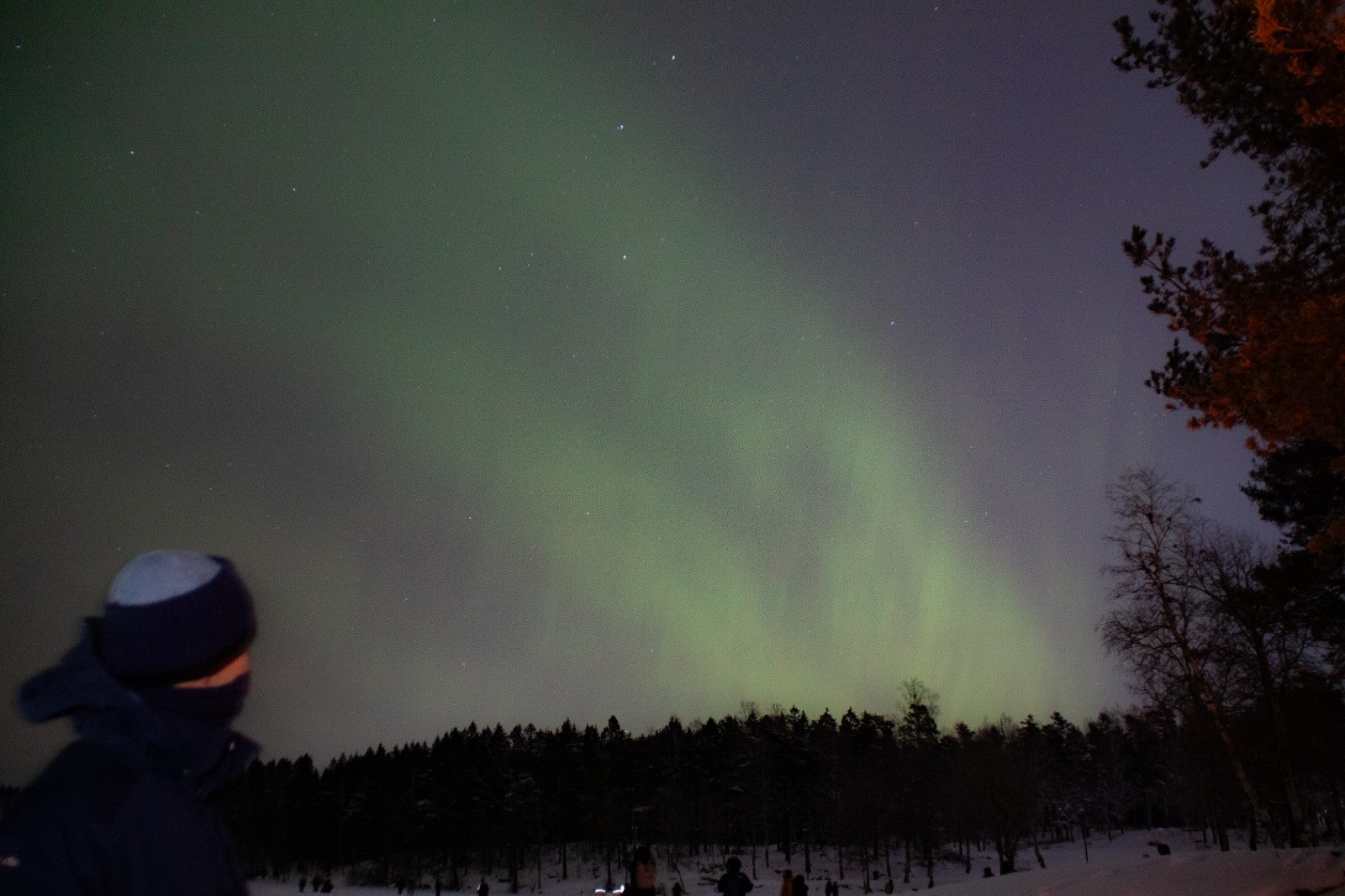
Winter replaced the August swims with snowy hikes and days of skiing. And a new habit took hold, which would have seemed completely absurd a few months earlier: I became a fan of cold baths. Not after a sauna, as tradition dictates—straight into the lakes, at three or four degrees Celsius, on a January morning, for no reason other than a kind of personal challenge set the night before. Jumping into water like that seems like a terrible idea, right up until the moment you get out, completely electrified, with a hard-to-describe energy and the sense you’ve conquered something within yourself.
The Lesson That Wasn’t on the Syllabus
If there’s one lesson I’ll take away from these ten months, it’s neither academic nor touristic. It’s profoundly human.
One evening, a Dutch friend confided in me with a sincerity that struck me. We talked about mental health, doubts, struggles—topics men still talk about too little among themselves. That conversation made me realize that being vulnerable isn’t a sign of weakness, but, on the contrary, a sign of trust. You can’t plan for this kind of exchange; it happens because you’ve spent enough evenings together for the barriers to drop a little.
I think this year made me more open to others, but also to myself.
The Longing Comes After
When I left Oslo at the end of May, I didn’t feel overwhelming sadness. I just thought I was going home after a school year.
It was only a few weeks later that I began to miss it. Returning to a more conventional routine made me realize all I’d left behind: the impromptu dinners, hikes decided on the spur of the moment, long summer evenings, late-night conversations, and how easily strangers could become friends in a single evening.
Even today, many of those I met are considering moving back to Norway. Some found a life balance there, others found much more. I completely understand the attachment. This country has a unique way of leaving its mark on those who spend a few months there.
If I had to give just one piece of advice to students hesitating about going on exchange, it wouldn’t be to choose a particular destination. It would simply be to embrace the unknown.
The experiences that shape a life rarely begin with something extraordinary. They often start with a simple “hello” to strangers in a bar, a message sent to a group chat, or an invitation you decide to say “yes” to.
Ten months later, those strangers had become friends scattered across the world.
And that’s probably the most beautiful memory I bring back from Norway.

Image gallery5
Comments0
Please log in to see or add a comment
Suggested Articles


